Console
How to Check the Audit Logs
6 min read
Updated Sep 4, 2026
Audit logs give you a read-only record of every action taken in eCourtDate, tracking changes to data, settings, and users for compliance.
Audit logs provide a read-only record of every action taken in the eCourtDate system, allowing you to track changes to data, settings, and users for accountability and compliance.
Overview
- Audit logs capture every request made to the eCourtDate API, whether by a human user or an API client
- Logs are read-only to ensure a tamper-proof record of all activity
- You can view audit logs at the system level through the Console, or at the record level within the application
- Logs can be filtered by agency, user, API client, and other criteria
- Audit log data can be exported as CSV or JSON files for external analysis
- A reverse IP lookup provides additional details about the IP address associated with each request
Prerequisites
- You must have an active eCourtDate account with read access to an eCourtDate agency
- To access Console-level audit logs, you must be a super admin user
- To view record-level audit logs in the application, you need read access to the relevant record
How-To Steps
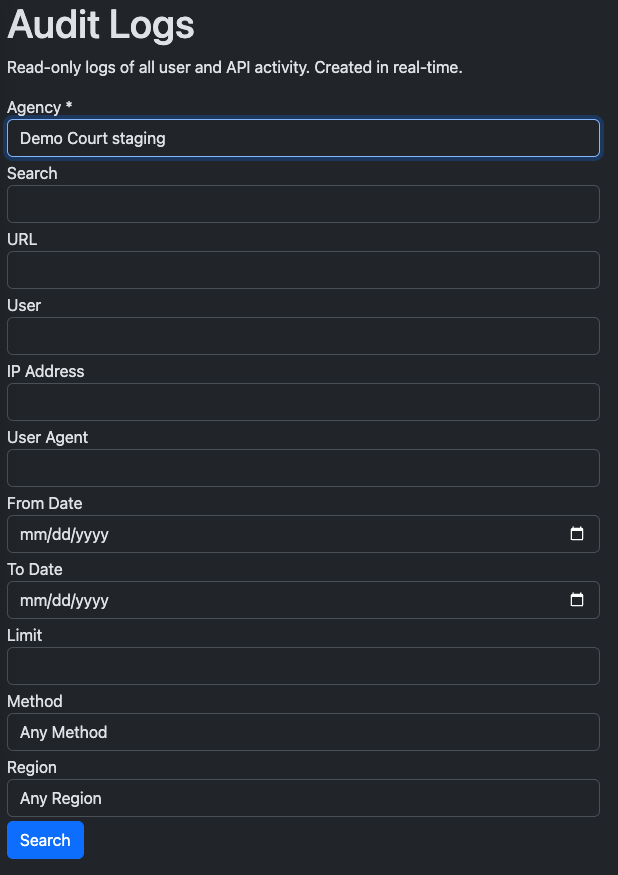
Step 1: Access Audit Logs in the Console
- Log in to the eCourtDate Console
- Click the Logs tab in the top navigation
- Select the Agency you want to view logs for
- Click the Search button to filter and load the logs
Step 2: View Log Details
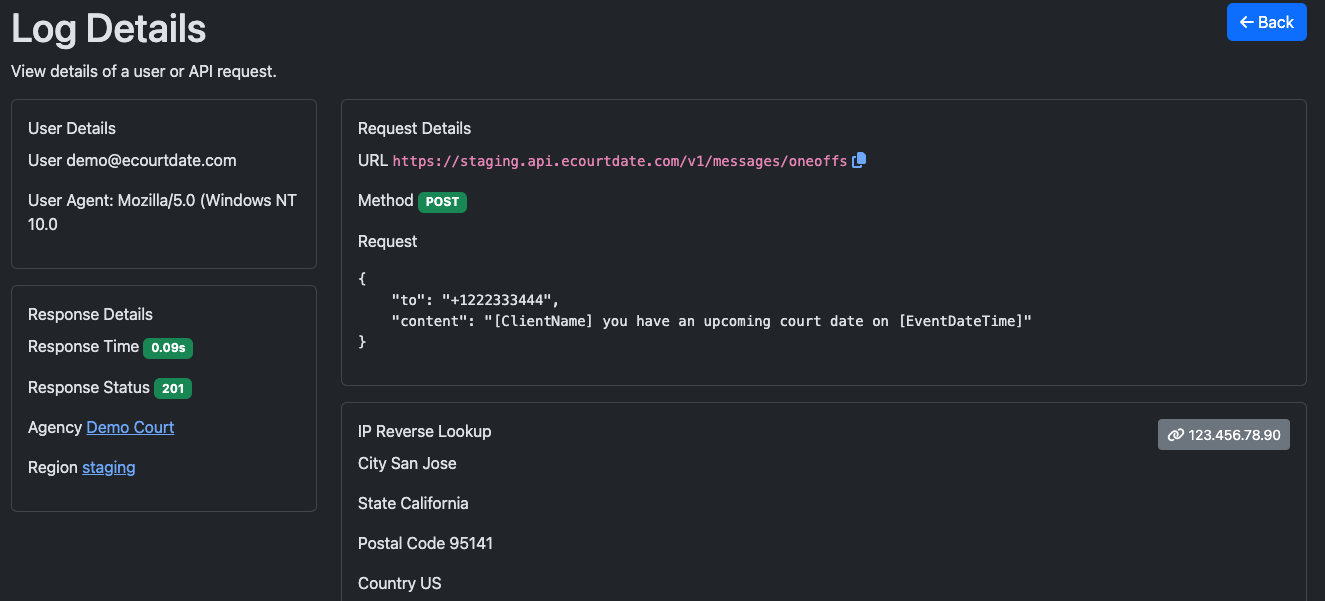
- Locate the log entry you want to examine in the results table
- Click the View button to see the full details of that audit log
- Review the log details, including the action performed, timestamp, and IP address information (a reverse IP lookup is performed automatically)
Step 3: Export Audit Logs
- After filtering the logs with your search criteria, click the CSV button to download logs as a CSV file, or click the JSON button for JSON format
- Save the file to your computer for offline analysis or reporting
How-To Steps for Specific Use Cases
Check Audit Logs for a Specific User
- In the eCourtDate Console, click the Users tab in the top navigation
- Find the user you want to view logs for
- Click the View Logs button next to that user
- Select the Agency you want to view logs for
- Click Search to filter the results
- Click View on any log entry to see its details
Check Audit Logs for a Specific API Client
- In the eCourtDate Console, click the APIs tab in the top navigation
- Find the API client you want to view logs for
- Click the View Logs button next to that client
- Select the Agency you want to view logs for
- Click Search to filter the results
- Click View on any log entry to see its details
Check Audit Logs for a Specific Record
- Log in to your staging or production eCourtDate agency
- Navigate to the record you want to check (for example, click Clients in the top navigation and find the client)
- Click the Edit button to view the record details
- Scroll down to the Audit Logs section at the bottom of the page
- Review the log information, which may include:
- When the record was created
- Who created the record
- When the record was last updated
- When the record was archived
- When the record was trashed
- Click View in Console to see the full audit log details for the record
- If the record was created or updated by an upload file, click the Created by Upload button to navigate to the upload file

What to Expect
After searching the audit logs, you will see a table of log entries matching your filter criteria. Each entry includes the action type, timestamp, user or API client that performed the action, and the affected resource. Clicking View on any entry provides detailed information including IP address and reverse lookup data. Audit logs are read-only and cannot be modified or deleted.
Best Practices
- Use audit logs regularly to monitor user activity and ensure compliance with your agency's policies
- Filter by specific users or API clients when investigating a particular incident
- Export logs periodically for long-term record keeping and external auditing
- Check record-level audit logs when troubleshooting data discrepancies to see who made the last change
- Review API client logs to verify that integrations are functioning correctly
Frequently Asked Questions
Q: Can audit logs be edited or deleted?
A: No. Audit logs are strictly read-only. This ensures a complete and tamper-proof record of all actions taken in the system.
Q: How far back do audit logs go?
A: Audit logs are retained for an extended period. Contact your administrator or eCourtDate support for details on the specific retention policy for your agency.
Q: Can I see audit logs for all agencies at once?
A: No. You must select a specific agency when viewing logs in the Console. This ensures data separation between tenants.
Q: What information does the reverse IP lookup provide?
A: The reverse IP lookup provides geographic and network details about the IP address used to make the request, such as the approximate location and internet service provider.
Q: Do audit logs capture changes made through file uploads?
A: Yes. Records created or updated through file uploads are tracked in the audit logs. The record-level audit log will show a Created by Upload button that links to the source upload file.
Troubleshooting
Issue: You cannot access the Logs tab in the Console
Symptoms: The Logs tab is not visible or returns an access denied error.
Solution:
- Verify you are logged into the eCourtDate Console (not the main application)
- Confirm your account has super admin permissions
- If you need access, contact your agency's super admin to update your role
Issue: No audit logs appear after searching
Symptoms: You click Search but the results table is empty.
Solution:
- Verify you selected the correct Agency from the dropdown
- Broaden your search criteria (remove filters or expand the date range)
- Confirm the agency has had activity during the time period you are searching
- If the issue persists, contact support by clicking the ticket button in the bottom right corner of the screen
Related Articles
Audit logs provide a read-only record of every action taken in the eCourtDate system, allowing you to track changes to data, settings, and users for accountability and compliance.
### Overview
- Audit logs capture every request made to the eCourtDate API, whether by a human user or an API client
- Logs are read-only to ensure a tamper-proof record of all activity
- You can view audit logs at the system level through the Console, or at the record level within the application
- Logs can be filtered by agency, user, API client, and other criteria
- Audit log data can be exported as CSV or JSON files for external analysis
- A reverse IP lookup provides additional details about the IP address associated with each request
### Prerequisites
- You must have an active eCourtDate account with read access to an eCourtDate agency
- To access Console-level audit logs, you must be a super admin user
- To view record-level audit logs in the application, you need read access to the relevant record
### How-To Steps
#### Step 1: Access Audit Logs in the Console
1. Log in to the [eCourtDate Console](https://console.ecourtdate.com)
2. Click the **Logs** tab in the top navigation
3. Select the **Agency** you want to view logs for
4. Click the **Search** button to filter and load the logs

#### Step 2: View Log Details
1. Locate the log entry you want to examine in the results table
2. Click the **View** button to see the full details of that audit log
3. Review the log details, including the action performed, timestamp, and IP address information (a reverse IP lookup is performed automatically)

#### Step 3: Export Audit Logs
1. After filtering the logs with your search criteria, click the **CSV** button to download logs as a CSV file, or click the **JSON** button for JSON format
2. Save the file to your computer for offline analysis or reporting
### How-To Steps for Specific Use Cases
#### Check Audit Logs for a Specific User
1. In the [eCourtDate Console](https://console.ecourtdate.com), click the **Users** tab in the top navigation
2. Find the user you want to view logs for
3. Click the **View Logs** button next to that user
4. Select the **Agency** you want to view logs for
5. Click **Search** to filter the results
6. Click **View** on any log entry to see its details
#### Check Audit Logs for a Specific API Client
1. In the [eCourtDate Console](https://console.ecourtdate.com), click the **APIs** tab in the top navigation
2. Find the API client you want to view logs for
3. Click the **View Logs** button next to that client
4. Select the **Agency** you want to view logs for
5. Click **Search** to filter the results
6. Click **View** on any log entry to see its details
#### Check Audit Logs for a Specific Record
1. Log in to your [staging](https://staging.ecourtdate.com) or [production](https://app.ecourtdate.com) eCourtDate agency
2. Navigate to the record you want to check (for example, click **Clients** in the top navigation and find the client)
3. Click the **Edit** button to view the record details
4. Scroll down to the **Audit Logs** section at the bottom of the page
5. Review the log information, which may include:
- When the record was created
- Who created the record
- When the record was last updated
- When the record was archived
- When the record was trashed
6. Click **View in Console** to see the full audit log details for the record
7. If the record was created or updated by an upload file, click the **Created by Upload** button to navigate to the upload file

### What to Expect
After searching the audit logs, you will see a table of log entries matching your filter criteria. Each entry includes the action type, timestamp, user or API client that performed the action, and the affected resource. Clicking **View** on any entry provides detailed information including IP address and reverse lookup data. Audit logs are read-only and cannot be modified or deleted.
### Best Practices
- Use audit logs regularly to monitor user activity and ensure compliance with your agency's policies
- Filter by specific users or API clients when investigating a particular incident
- Export logs periodically for long-term record keeping and external auditing
- Check record-level audit logs when troubleshooting data discrepancies to see who made the last change
- Review API client logs to verify that integrations are functioning correctly
### Frequently Asked Questions
**Q: Can audit logs be edited or deleted?**
A: No. Audit logs are strictly read-only. This ensures a complete and tamper-proof record of all actions taken in the system.
**Q: How far back do audit logs go?**
A: Audit logs are retained for an extended period. Contact your administrator or eCourtDate support for details on the specific retention policy for your agency.
**Q: Can I see audit logs for all agencies at once?**
A: No. You must select a specific agency when viewing logs in the Console. This ensures data separation between tenants.
**Q: What information does the reverse IP lookup provide?**
A: The reverse IP lookup provides geographic and network details about the IP address used to make the request, such as the approximate location and internet service provider.
**Q: Do audit logs capture changes made through file uploads?**
A: Yes. Records created or updated through file uploads are tracked in the audit logs. The record-level audit log will show a **Created by Upload** button that links to the source upload file.
### Troubleshooting
**Issue:** You cannot access the Logs tab in the Console
**Symptoms:** The **Logs** tab is not visible or returns an access denied error.
**Solution:**
1. Verify you are logged into the [eCourtDate Console](https://console.ecourtdate.com) (not the main application)
2. Confirm your account has super admin permissions
3. If you need access, contact your agency's super admin to update your role
**Issue:** No audit logs appear after searching
**Symptoms:** You click **Search** but the results table is empty.
**Solution:**
1. Verify you selected the correct **Agency** from the dropdown
2. Broaden your search criteria (remove filters or expand the date range)
3. Confirm the agency has had activity during the time period you are searching
4. If the issue persists, contact support by clicking the ticket button in the bottom right corner of the screen
### Related Articles
- [How to Create a New Agency](/how-to-create-a-new-agency)
- [How to Switch Agencies](/how-to-switch-agencies)
- [How to Run Console Tools](/how-to-run-console-tools)
- [Roles and Permissions](/roles-and-permissions)
- [How to Manage Users](/how-to-manage-users)